
WHO AM I? PRODUCT MANAGER OR BRAND MANAGER – (Brand Management 97)
Preamble
In most Indian pharma companies, there are no completely separate Product Managers and Brand Managers. Very often, the same person performs both roles. The responsibilities overlap.
I paused and added softly:
“But if you ask me what the designation should truly be…”
Sandhya my mentee interrupted me with a smile that carried both innocence and insight.
“Sir, now I understand something deeper,” she said.
“When organizations create Product Managers, they unconsciously create a sales mindset.”
“People begin managing products.”
“They chase numbers.”
“They push inventory.”
“But when organizations create Brand Managers…”
She stopped for a second.
“…they begin creating custodians of trust.”
“People start thinking about doctors, patients, emotions, memories, and meaning.”
Her words lingered in the air.
And at that moment, I realized that management education had taught her concepts.
But reflection had taught her wisdom.
Read on for the next three minutes
A conversation with Sandhya
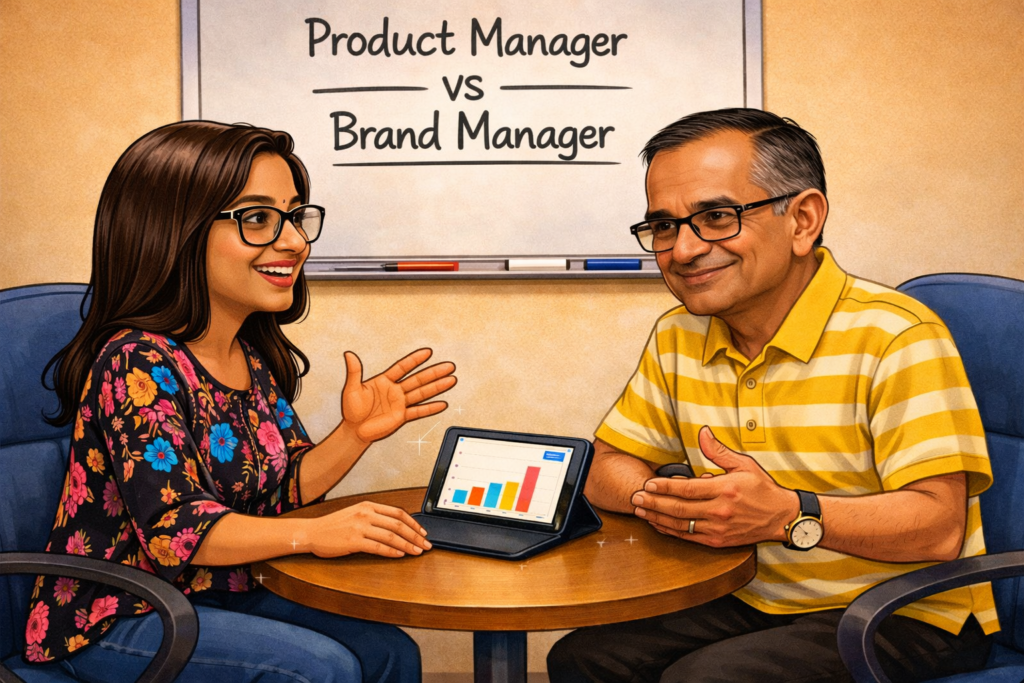
I was having coffee with Sandhya, a young management trainee who had recently joined a large Indian pharmaceutical company. She had just passed out from one of India’s top B-schools. Bright eyes. Sharp mind. Full of dreams.
“Vivek Sir,” she asked with curiosity, “I notice that in all your articles and talks, you use the term Brand Manager. But in my company, after confirmation, my designation will be Deputy Product Manager. What exactly is the difference between a Product Manager and a Brand Manager?”
I smiled.
“Sandhya, in the Indian pharma industry, the terms Product Manager and Brand Manager are often used interchangeably. But if you look deeply, there is a subtle and very important difference.”
She leaned forward with interest.
“Sir, can you explain?”
“Of course,” I said. “But let us begin with the role of a Product Manager first.”
I opened my iPad and showed her an article from McKinsey & Company.
“The article says something very beautiful,” I told her.
“It describes Product Managers as the ‘glue’ that binds many departments together. They connect people from design, sales, marketing, finance, operations, legal, and customer-facing teams. They help decide what should be built, how it should be launched, and how it should improve over time.”
Sandhya nodded slowly.
I continued.
“The modern Product Manager is no longer just a coordinator. Today, many companies look at the Product Manager almost like a mini-CEO of the product.”
“Mini-CEO?” she asked.
“Yes,” I replied. “Because the Product Manager has to think about many things at the same time — customer needs, competition, pricing, future opportunities, product improvements, and business growth.”
I could see the excitement growing on her face.
“Sir, this sounds much bigger than I imagined.”
“It is,” I said warmly.
“The McKinsey article also explains that today’s Product Managers are deeply involved in design decisions, launch planning, pricing discussions, and even data analysis. They study customer behavior closely and spend a lot of time understanding what people truly need.”
“Now let us bring this idea into the Indian pharma industry.”
Sandhya quickly opened her notebook.
“Imagine your company wants to launch a new anti-diabetic medicine,” I said.
“Sir, this sounds much bigger than I imagined.”
“It is,” I said warmly.
“The McKinsey article also explains that today’s Product Managers are deeply involved in design decisions, launch planning, pricing discussions, and even data analysis. They study customer behavior closely and spend a lot of time understanding what people truly need.”
“Now let us bring this idea into the Indian pharma industry.”
Sandhya quickly opened her notebook.
Sandhya quickly opened her notebook.
“Imagine your company wants to launch a new anti-diabetic medicine,” I said.
“The Product Manager’s journey starts much before the launch.”
“She may interact with doctors to understand unmet medical needs. She may study patient problems. She may discuss with Marketing R&D, formulation teams, finance, medical affairs, training, and manufacturing.”
“She will ask questions like:
- Is there a real market need?
- What gap can this product fill?
- Can the company manufacture it efficiently?
- Will doctors trust it?
- Will patients benefit from it?
- Is the product commercially viable?”
Sandhya was writing rapidly now.
“The Product Manager,” I continued, “is deeply involved in shaping the product itself.”
“Then where does the Brand Manager come in?” she asked.
I smiled again.
“That is where the story becomes even more interesting.”
“The Product Manager helps create the product.”
“The Brand Manager helps create belief.”
She stopped writing for a moment and looked up.
“Belief?” she repeated softly.
“Yes, Sandhya. Because medicines may heal the body. But brands live in the mind.”
I continued slowly.
“Once the product is ready, the Brand Manager steps in to build trust, recall, preference, and emotional connection.”
“The Brand Manager asks:
- Why should doctors prescribe our brand?
- What should doctors remember about it?
- How do we make the brand meaningful?
- How do we differentiate it from twenty similar brands in the market?”
I paused and then added:
“In India, thousands of pharmaceutical brands compete for attention. Many have similar molecules. Similar prices. Similar claims.”
“So the real battle is not only in chemistry.”
“It is in perception.”
Sandhya smiled.
“That sounds true, Sir.”
“The Brand Manager,” I continued, “studies many sources of information before creating strategy.”
“She studies:
- Prescription audits
- Retail shop audits
- Internal sales reports
- Does a comprehensive data analysis
- Competitor activity
- Doctor feedback
- Patient insights gathered through face-to-face interactions
- Initiates HEOR for real-life evidence”
“Then she develops strategies for positioning, communication, doctor engagement, campaigns, patient education, and sales-force execution.”
“In simple words,” I said, “the Product Manager helps build the medicine. The Brand Manager helps build the brand.”
Sandhya leaned back thoughtfully.
“So the Product Manager focuses more on the product, while the Brand Manager focuses more on perception and preference?”
“Exactly,” I replied.
“Though in many Indian pharma companies, one person may perform both roles.”
I continued:
“A Product Manager may ask: ‘What does this medicine do?’
A Brand Manager may ask: ‘What does this brand mean to doctors and patients?’”
Sandhya smiled brightly now.
“Sir, now I understand why you always use the term Brand Manager in your writings.”
I laughed softly.
“Because great pharma companies do not merely sell products.”
“They build brands that doctors trust and patients remember.”
I then added one final thought before we departed.
“In the future, Sandhya, the best pharma leaders will not only understand molecules. They will understand human emotions, patient experiences, doctor expectations, and the power of trust.”
“Science may create the medicine.”
“But humanity builds the brand.”
For a few moments, she remained silent.
Then she closed her notebook gently and said with a smile:
“Sir… perhaps the right designation for me should really be ‘Brand Manager.’”
I smiled.
“Sandhya, in most Indian pharma companies, there are no completely separate Product Managers and Brand Managers. Very often, the same person performs both roles. The responsibilities overlap.”
I paused and added softly:
“But if you ask me what the designation should truly be…”
Sandhya shot in – “It should be Brand Manager.”
“Yes Sandhya. Because finally, pharma companies do not merely manage products.”
“They build brands that doctors trust, patients remember, and humanity respects.”
Sandhya quickly opened her notebook.
“Imagine your company wants to launch a new anti-diabetic medicine,” I said.
“The Product Manager’s journey starts much before the launch.”
“She may interact with doctors to understand unmet medical needs. She may study patient problems. She may discuss with Marketing R&D, formulation teams, finance, medical affairs, training, and manufacturing.”
“She will ask questions like:
Is there a real market need?
What gap can this product fill?
Can the company manufacture it efficiently?
Will doctors trust it?
Will patients benefit from it?
Is the product commercially viable?”
Sandhya was writing rapidly now.
“The Product Manager,” I continued, “is deeply involved in shaping the product itself.”
“Then where does the Brand Manager come in?” she asked.
I smiled again.
“That is where the story becomes even more interesting.”
“The Product Manager helps create the product.”
“The Brand Manager helps create belief.”
She stopped writing for a moment and looked up.
“Belief?” she repeated softly.
“Yes, Sandhya. Because medicines may heal the body. But brands live in the mind.”
I continued slowly.
“Once the product is ready, the Brand Manager steps in to build trust, recall, preference, and emotional connection.”
“The Brand Manager asks:
Why should doctors prescribe our brand?
What should doctors remember about it?
How do we make the brand meaningful?
How do we differentiate it from twenty similar brands in the market?”
I paused and then added:
“In India, thousands of pharmaceutical brands compete for attention. Many have similar molecules. Similar prices. Similar claims.”
“So the real battle is not only in chemistry.”
“It is in perception.”
Sandhya smiled.
“That sounds true, Sir.”
“The Brand Manager,” I continued, “studies many sources of information before creating strategy.”
“She studies:
Prescription audits
Retail shop audits
Internal sales reports
Does a comprehensive data analysis
Competitor activity
Doctor feedback
Patient insights gathered through face-to-face interactions
Initiates HEOR for real-life evidence”
“Then she develops strategies for positioning, communication, doctor engagement, campaigns, patient education, and sales-force execution.”
“In simple words,” I said, “the Product Manager helps build the medicine. The Brand Manager helps build the brand.”
Sandhya leaned back thoughtfully.
“So the Product Manager focuses more on the product, while the Brand Manager focuses more on perception and preference?”
“Exactly,” I replied.
“Though in many Indian pharma companies, one person may perform both roles.”
I continued:
“A Product Manager may ask: ‘What does this medicine do?’
A Brand Manager may ask: ‘What does this brand mean to doctors and patients?’”
Sandhya smiled brightly now.
“Sir, now I understand why you always use the term Brand Manager in your writings.”
I laughed softly.
“Because great pharma companies do not merely sell products.”
“They build brands that doctors trust and patients remember.”
I then added one final thought before we departed.
“In the future, Sandhya, the best pharma leaders will not only understand molecules. They will understand human emotions, patient experiences, doctor expectations, and the power of trust.”
“Science may create the medicine.”
“But humanity builds the brand.”
For a few moments, she remained silent.
Then she closed her notebook gently and said with a smile:
“Sir… perhaps the right designation for me should really be ‘Brand Manager.’”
I smiled.
“Sandhya, in most Indian pharma companies, there are no completely separate Product Managers and Brand Managers. Very often, the same person performs both roles. The responsibilities overlap.”
I paused and added softly:
“But if you ask me what the designation should truly be…”
Sandhya shot in – “It should be Brand Manager.”
“Yes Sandhya. Because finally, pharma companies do not merely manage products.”
“They build brands that doctors trust, patients remember, and humanity respects.”