
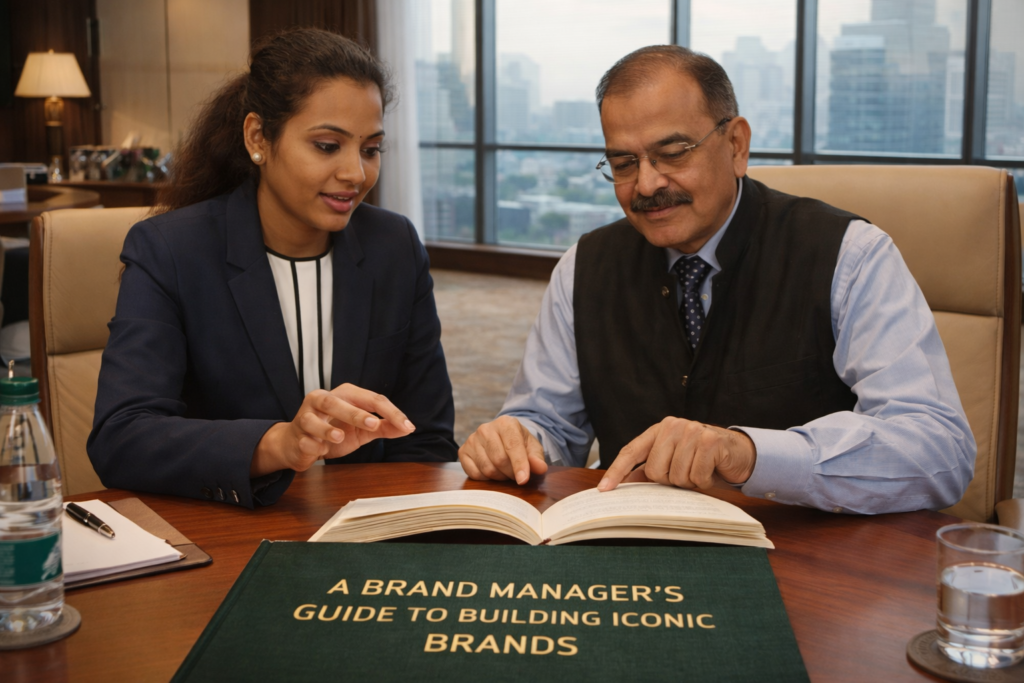
A Brand Manager’s Guide to Building Iconic Brands – Brand Management 123
Definition of an Iconic Brand
An iconic pharma brand in India is a brand that rises above the crowded market and earns deep trust from doctors, patients, caregivers and field teams.
An iconic brand is not known only for high prescriptions or strong promotion.
It is known because people believe in it, remember it easily, and choose it with confidence.
An iconic brand delivers consistent clinical value, carries a clear promise, and creates a positive emotional experience for everyone involved in the treatment journey.
It stands out through its name, story, packaging, services, and behaviour in the field.
Most importantly, an iconic pharma brand becomes a long‑term companion in care; respected by doctors, loved by patients, and proudly championed by medical representatives and managers.
An iconic pharma brand in India is one that rises above the crowded market and creates its own space through a clear clinical promise, strong recall assets, and a consistent experience for doctors and patients.
It earns trust not by pushing prescriptions but by delivering value that competitors cannot easily copy, through better outcomes, distinctive identity, and meaningful patient support.
This is exactly why the traditional market‑share mindset fails to create such brands.
A mindset built on chasing monthly numbers, copying competitors, and fighting for the same prescriptions in the same crowded categories cannot produce the distinctiveness, emotional connection, or long‑term trust that iconic brands require.
Market share may reward short‑term pressure, but iconic brands are built by long‑term purpose.
Why a Market‑Share Mindset Cannot Build Iconic Brands in Pharma India
Indian pharma has always been a land of contrasts. On one side, we see companies chasing quarterly numbers, pushing prescriptions, and celebrating “targets achieved.” On the other side, only a few, very few, brands rise above the noise, trusted, loved, and remembered by doctors and patients for decades.
These iconic brands are not built by accident. They are built by mindset.
And the biggest enemy of iconic brand building is what Tom Peters famously called the market‑share mindset.
Tom Peters warned that when companies operate with a market‑share mindset, they stop thinking like brand builders and start behaving like scorekeepers. Like in a basketball match.
Their energy shifts from creating value to chasing numbers.
They watch competitors more than customers, copy what others are doing, and push their teams to “increase share” instead of improving the brand experience.
In Pharma India, this mindset shows up in crowded therapy areas where dozens of brands look alike, sound alike, and fight for the same prescriptions with the same tactics. It leads to me‑too launches, aggressive monthly pressure, and transactional selling that may lift short‑term sales but weakens long‑term trust.
Peters’ insight is simple: when the goal becomes beating the competition instead of serving the doctor and patient, the brand loses its soul, and no brand without a soul can ever become iconic.
And then medical representatives tell a doctor – “I want a small share og your pprescriptions from brand Brandex.
And then we complain: “Doctors, hospitals, polyclinics are not allowing medical representatives”.
In Pharma India, this market‑share mindset becomes most visible in therapy areas where brands multiply without meaning.
The glimepiride–metformin, or even metformin 1000 space, is a classic example: dozens of combinations, identical strengths, similar packaging, and the same “better glycemic control” message repeated endlessly.
No one listens to doctor’s “मन की बात”
The pantoprazole and rabeprazole markets show the same pattern, with companies fighting for the same prescriptions through schemes, discounts, and monthly pressure rather than through real differentiation.
Even in nutraceuticals, every company launches a “me‑too” multivitamin with zinc or a generic antioxidant blend, hoping that field force intensity alone will deliver growth.
These brands do not fail because the molecules are weak; they fail because the mindset behind them is weak. When the strategy is simply to “capture share,” the brand becomes a commodity. And commodities cannot become iconic — they can only become replaceable.
The only way to escape this trap is to shift from a market‑share mindset to a Blue Ocean mindset, a way of thinking that focuses on creating new value instead of fighting for the same prescriptions in the same crowded space.
Blue Ocean thinking pushes pharma teams to look beyond competitors and ask deeper questions:
- What unmet needs can we solve?
- What new experiences can we create for doctors and patients?
- How can we make our brand the first, the best, or the only in its category?
When brand managers adopt this mindset, they stop copying and start shaping the market. They build brands that stand out through clinical clarity, patient support, distinctive identity, and meaningful innovation.
In Pharma India, the few brands that have broken away from the clutter, whether in inhalation therapy, fixed‑dose combinations, or lifestyle‑linked nutraceuticals, did so because they created new value instead of fighting old battles.
Blue Ocean brands do not chase share; they create spaces where share comes naturally.
The Indian market already offers clear proof that Blue Ocean thinking works.
Cipla’s leadership in inhalation therapy is a powerful example: while most companies were fighting in the tablet‑based asthma market, Cipla created a new space by owning inhalation devices, patient education, and technique training.
USV did something similar with Glycomet‑GP, shaping the fixed‑dose combination category with strong science, consistent branding, and a clear value promise when others were still pushing plain molecules.
The success of Dr. Reddy’s Ordent is another classic example.
Sun Pharma’s Revital also shows Blue Ocean behavior. It broke away from the “generic multivitamin” crowd and built a lifestyle‑energy positioning that made it a household name. These brands did not win because they shouted louder; they won because they created new value, new experiences, and new mental spaces in the minds of doctors and patients.
They show that when pharma brand managers stop fighting for slices of the same pie and instead bake a bigger, better pie, iconic brands emerge naturally.
The real foundation of iconic, sustainable pharma brands is built not in crowded markets or competitive battles, but in the deeper layers of brand meaning, identity, and experience.
These brands grow because they stand for something clear, memorable, and valuable in the doctor’s mind and in the patient’s life. They are anchored by strong brand names, distinctive visual assets, and a clinical promise that remains consistent over years.
They use modern approaches like H2H communication, patient‑centered services, and adherence support to create a richer treatment experience. They invest in packaging that improves recall and builds trust.
And above all, they win the hearts of medical representatives and field managers, who carry the brand with pride and treat it as their own.
When a brand earns this kind of emotional ownership, both inside the company and outside in the market, it becomes resilient, respected, and irreplaceable. This is the path to iconicity, and it has nothing to do with chasing market share.
1. The Strength of a Brand Name: The First Anchor of Iconicity
A strong brand name is often the first signal of trust in a doctor’s mind.
In a market crowded with similar molecules and identical claims, the name becomes the anchor that carries meaning, memory, and confidence.
Iconic pharma brands in India have names that are easy to recall, easy to pronounce, and emotionally linked to the therapy promise. They stand out on a prescription pad and stay in the doctor’s mind long after the detailing is over.
Names like Zantac, A to Z, Shelcal, Atarax, Augmentin, and Glycomet did not succeed only because of clinical strength; they succeeded because their names created instant clarity and comfort.
A powerful name becomes a mental shortcut, a symbol of reliability.
When brand managers treat naming as a strategic decision rather than a last‑minute formality, they lay the foundation for long‑term brand equity.
A brand with a strong name enters the clinic with confidence; a weak name enters with a handicap.
2. H2H and Patient‑Centered Marketing: Moving Beyond the Pill
The next pillar of iconicity is the shift from traditional doctor‑centric promotion to H2H, Human to Human communication and patient‑centered marketing.
Doctors today are overwhelmed with information, brands, and pressure. What they value more is clarity, empathy, and support that makes their clinical decisions easier.
H2H marketing focuses on understanding the human behind the prescription; the doctor’s concerns, the patient’s fears, and the caregiver’s challenges. Patient‑centered marketing goes even deeper by offering tools that improve adherence, simplify therapy, and support lifestyle changes. This could be as simple as a dosing calendar, a patient booklet, a digital reminder, or a helpline for inhalation technique.
In the late 1970s and the early 1980s, during doctors callsI still remember seeing Cipla’s counsellors waiting outside doctors’ chambers, ready to help patients who had just been prescribed Asthalin inhalers. The care in their voice, the patience in their hands, it felt like real compassion in action. ‘H2H in action, 43 years before the book H2H Marketing’ was written.
When a brand becomes a partner in care rather than just a product, it earns a place in the doctor’s long‑term memory. Iconic brands are built not only by what they say in the clinic but by what they do in the patient’s life.
3. Distinctive Packaging: The Most Underused Differentiator in Pharma India
Packaging is often treated as a technical requirement, but in reality, it is one of the most powerful tools for building distinctiveness. In a chemist’s shelf filled with look‑alike strips and boxes, distinctive packaging becomes a visual signature that reinforces trust and recall. It signals quality, seriousness, and attention to detail. It helps patients identify their medication easily and improves adherence.
Brands like Zedex, Dynapar QPS, Lariago DS, have shown how strong packaging can become a competitive advantage.
In a market where many brands share the same molecule, packaging becomes the brand’s face, the one element that reaches the doctor, the patient, and the caregiver without distortion. When brand managers invest in thoughtful, memorable, and functional packaging, they create a Blue Ocean of visual identity that competitors cannot easily copy.
4. Making Field Teams and doctors Fall in Love with the Brand
No brand becomes iconic unless the field force carries it with pride. Medical representatives and field managers are the living, breathing ambassadors of the brand. When they believe in the brand’s purpose, understand its science, and feel emotionally connected to its story, they communicate with conviction.
Doctors sense that conviction instantly. To build this emotional ownership, companies must give field teams more than detailing points, they must give them meaning.
This includes a clear brand story, strong training, inspiring launch rituals, recognition programs, and communication tools they feel proud to use. When a brand becomes the “darling brand” of the field force, it gains a level of energy and authenticity that no marketing budget can buy. Iconic brands are carried on the shoulders of people who love them.
5. Avoiding Transactional Selling and Unethical Practices
The final pillar is integrity.
Iconic brands cannot be built on transactional selling, inducements, or unethical practices. These tactics may deliver short‑term prescriptions, but they erode long‑term trust, the very foundation of iconicity.
Doctors remember brands that behave ethically, communicate honestly, and respect their time and intelligence. Patients trust brands that stand for quality and transparency. Field teams feel proud when they represent brands that win through value, not pressure. As UCPMP becomes more visible and patient awareness grows, ethical behaviour will become a competitive advantage.
The brands that rise in the next decade will be the ones that choose trust over tactics and long‑term equity over short‑term spikes. Iconic brands are built on behaviour, not inducements.
Conclusion: Iconic Brands Are Built by Purpose, Not Pressure
In the end, the difference between a market‑share brand and an iconic brand is the difference between chasing and creating.
Market‑share brands chase prescriptions, competitors, and monthly numbers.
Iconic brands create trust, meaning, and long‑term value.
The market‑share mindset pushes companies into crowded spaces where every brand looks the same and behaves the same. It rewards short‑term spikes but weakens long‑term equity.
In contrast, the Blue Ocean mindset encourages companies to step out of the noise and build brands that matter, brands with a clear promise, a strong identity, and a meaningful role in the patient’s life. When this mindset is supported by strong brand names, H2H communication, patient‑centred services, distinctive packaging, and a field force that loves the brand, the result is a brand that becomes unforgettable.
Such brands do not depend on inducements or transactional selling; they grow through trust, consistency, and purpose.
For Pharma India, the path to iconicity is clear: stop fighting for market share and start building brands that doctors respect, patients value, and field teams proudly carry.
Market share may follow, but iconicity must lead.