
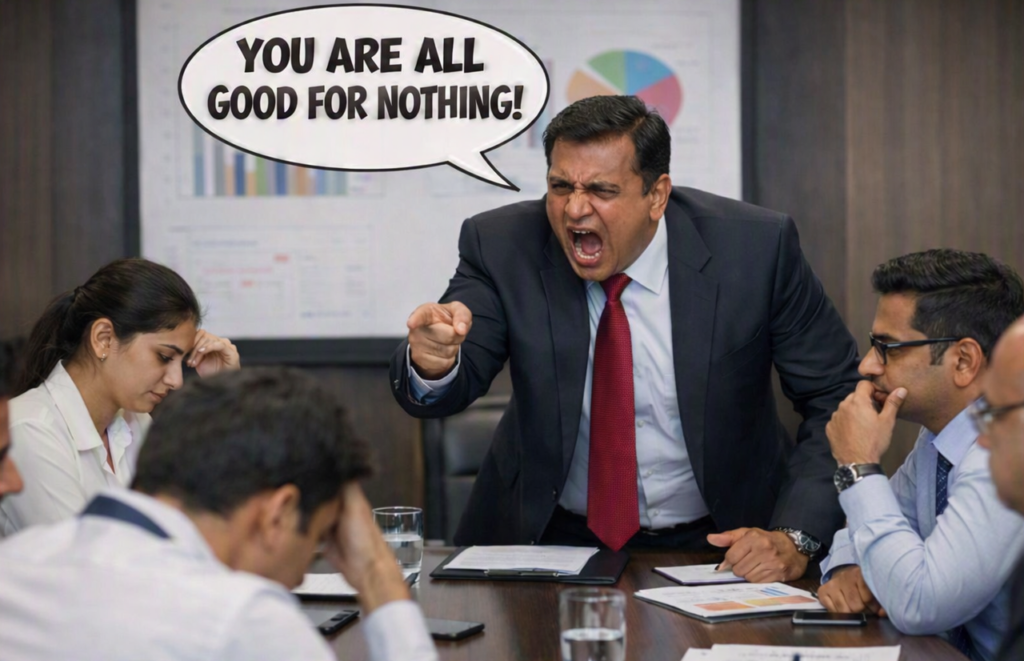
When Power Blinds: The Hubris of N. P. Shankar – Sales Management 34
N. P. Shankar was once the pride of his company, a visionary who built a thriving pharma enterprise from scratch. His confidence was magnetic, his ambition contagious.
But somewhere along the way, confidence turned into arrogance, and ambition into obsession.
Shankar began to believe he was infallible.
He stopped listening. He stopped learning. He started commanding.
Hubris had quietly taken hold, that dangerous cocktail of overconfidence, pride, and power.
It inflated his ego and eroded his moral compass. He no longer led to serve; he led to be served.
His managers saw the signs but stayed silent.
They feared his temper more than they valued truth.
And that silence became complicity. When a leader embraces hubris, those around him share the responsibility, because they allowed it to grow unchecked.
Hubris blinds leaders.
Neuroscience shows that power dulls empathy and weakens the brain’s mirror system, the ability to feel what others feel. Shankar’s world shrank to one voice: his own.
But hubris can be cured.
It is learned, not born.
It can be unlearned through humility, feedback, and courage.
One chairman once asked his CEO to speak to his people about humility, and that single act began his redemption.
If your leader has embraced hubris and you remain silent, you are part of the problem.
Speak up. Warn him.
Help him see what pride hides.
Because saving a leader from hubris may save not just his career, but the soul of the organization itself.